
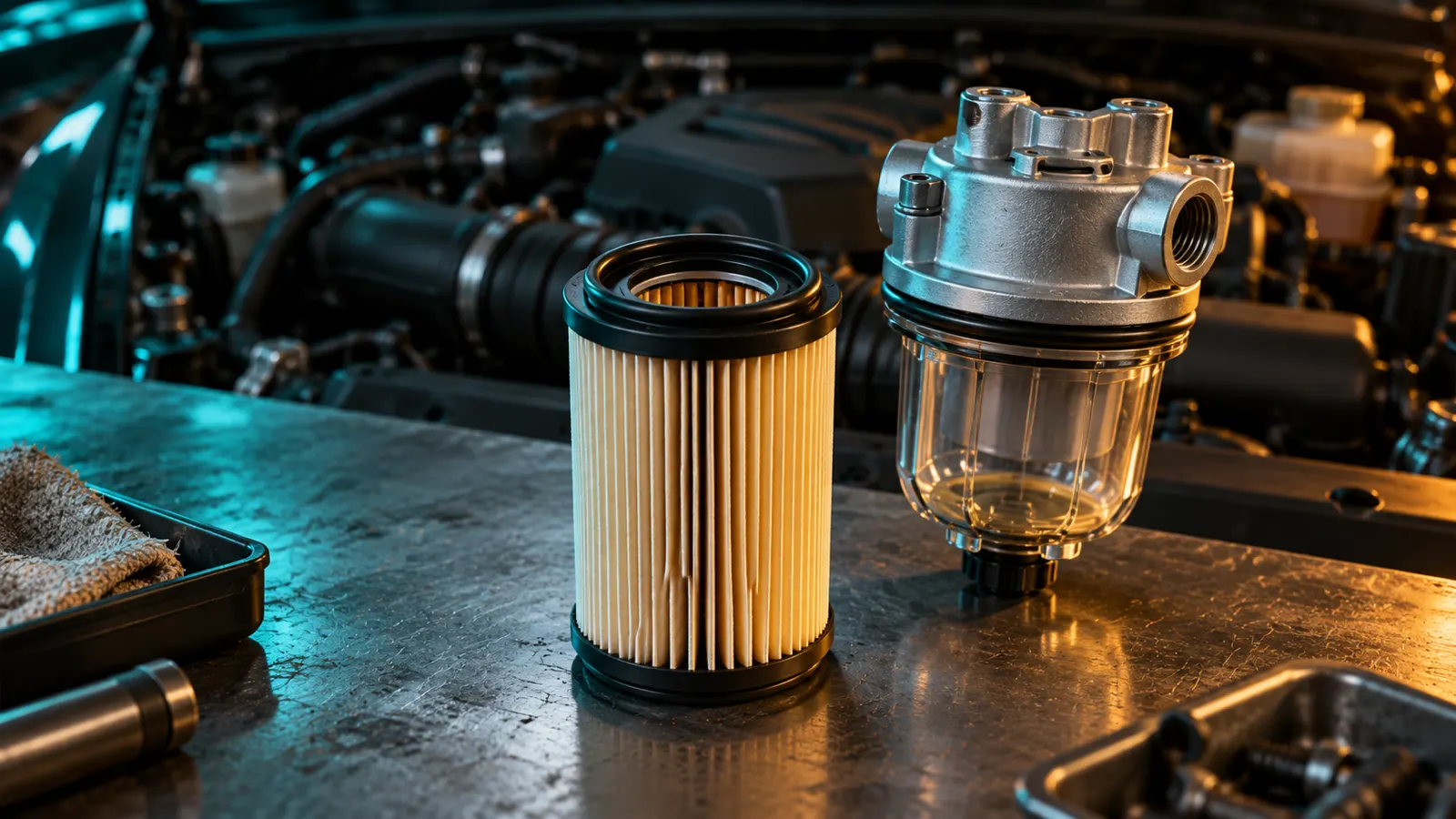
Diesel Fuel Filter Replacement: When to Do It, What It Costs, and What Happens If You Don't
By CarInterval Team · Last reviewed: · 18 sources checked
Your diesel loses power on a motorway overtake. Nobody set a reminder. The filter hasn’t been touched in 40,000 miles.
A diesel fuel filter replacement should happen every 10,000 to 15,000 miles[1][5]. A clogged diesel fuel filter starves common rail injectors and makes the high-pressure fuel pump cavitate[3]. Skipping a $50–$100 filter can lead to a CP4 pump failure that costs $8,000–$12,000+ to clean up[5].
Tip: Set a diesel fuel filter reminder in CarInterval so it never slips past you. It’s free on iOS.
| Question | Answer | Sources |
|---|---|---|
| Typical replacement interval | 10,000–15,000 miles | [1][4][5] |
| Ram 6.7L Cummins (Stellantis TSB) | Replace if more than 15,000 miles since the last change | [4] |
| Towing, biodiesel or poor fuel | Every 10,000 miles | [5][1] |
| Cost of a CP4 pump failure | $5,000–$12,000+ | [1][5] |
Why diesel fuel filters matter more than you think
Modern diesel engines work under conditions that older, purely mechanical diesels never faced:
- Huge pressure. Common rail injection systems push fuel at up to 30,000 PSI at the rail[2]. A common rail system feeds every injector from one shared high-pressure rail.
- Tiny tolerances. Parts inside these systems are machined to tolerances measured in microns[3].
- Fuel is the lubricant. The high-pressure pump has no separate oil supply and relies on diesel for lubrication[1].
Why it matters: contamination that an older diesel would chew up and spit out “can be catastrophic” in a modern common rail system[3], whether it was made by Bosch, Delphi or Denso.
Two parts fight that contamination, and they are not the same thing:
- The fuel filter element catches rust, dirt and microbial growth before fuel reaches the pump[1].
- The water separator uses coalescing media to pull water droplets out of the fuel and drop them into a bowl that you drain by hand[1].
If you treat them as one part, the water drains get neglected. That neglect ends in pump failure.
Diesel fuel filter replacement intervals by vehicle
Factory schedules are written around the warranty period. Independent diesel shops plan for the whole life of the engine[5]. Once you add heavy towing, commercial use or poor fuel, the factory number is often too long.
| Vehicle | Filter interval | Source | Notes |
|---|---|---|---|
| Ford 6.7L Power Stroke | 15,000 miles or 12 months | [1] | Frame-rail filter/water separator plus an engine-mounted secondary filter. Shops replace both together[2]. |
| Ram 6.7L Cummins | 15,000 miles | [4][5] | Dual-filter system (2013+). Replace both at the same time. |
| GM 6.6L Duramax (L5P) | 15,000–22,500 miles | [2] | Factory says 22,500. Single chassis filter. The plastic cap threads strip if over-torqued. |
| VW/Audi 2.0 TDI | 20,000 miles* | [3] | Priming after a change needs a scan tool[16]. Skipped priming risks the high-pressure pump. |
| Mercedes BlueTEC | 20,000 miles* | [6] | Mounted in the centre of the engine valley. Water sensor seals degrade over time. |
| BMW xDrive diesel | 20,000–30,000 miles* | [7] | Exposed underbody location. Risk of fuel waxing in cold climates. |
| Toyota Land Cruiser diesel | 12,000 miles* | [3] | Very sensitive to drops in rail pressure. |
* The linked source covers this vehicle type or common rail systems in general but doesn’t state this exact interval. Goldfarb says most manufacturers specify 15,000–30,000 miles[3]. Check your owner’s manual.
The 10,000-mile rule. Independent diesel shops recommend changing light-duty diesel fuel filters every 10,000 miles[5]. Factory intervals assume average driving conditions, not heavy-duty use[5]. They also don’t account for contaminated fuel from truck-stop tanks, which can shrink a filter’s real life to 8,000–10,000 miles[2]. If you run a tuned truck, tow regularly or buy questionable fuel, follow the 10,000-mile rule.
Water separator: the maintenance step most owners miss
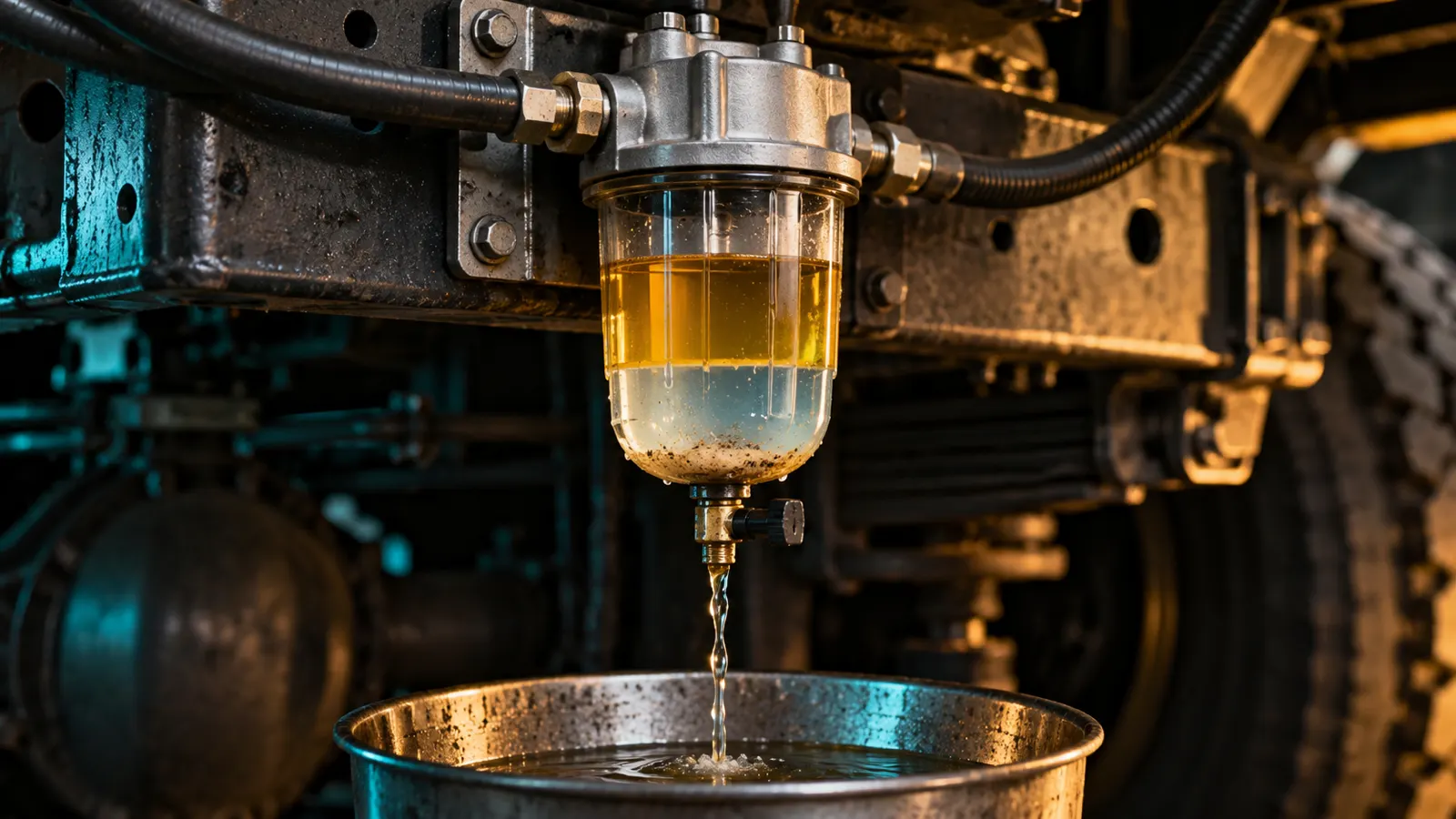
Draining the water separator is a separate job from changing the filter element. Water builds up all the time from condensation in storage tanks, delivery trucks and your own fuel tank[1].
Why it matters:
- Water left in the housing breeds microbial growth, called “diesel bug”[1].
- Water doesn’t lubricate the way diesel does. Water that reaches the high-pressure pump causes metal-on-metal wear within minutes of dry running[1].
How to check it depends on your truck:
| Truck | How you check for water |
|---|---|
| Ford 6.7L Power Stroke | A “Water in Fuel” dash light, tied to a sensor in the filter housing[1] |
| Ram 6.7L Cummins | Turn the yellow drain lever on the chassis-mounted separator[2] |
| GM Duramax (2001–2016) | Open the brass bleeder screw on the aluminium filter head[2] |
Drain the bowl at every oil change, roughly every 10,000 miles[1]. If the Water in Fuel light comes on, drain it within a day or two[1].
Symptoms of a clogged diesel fuel filter
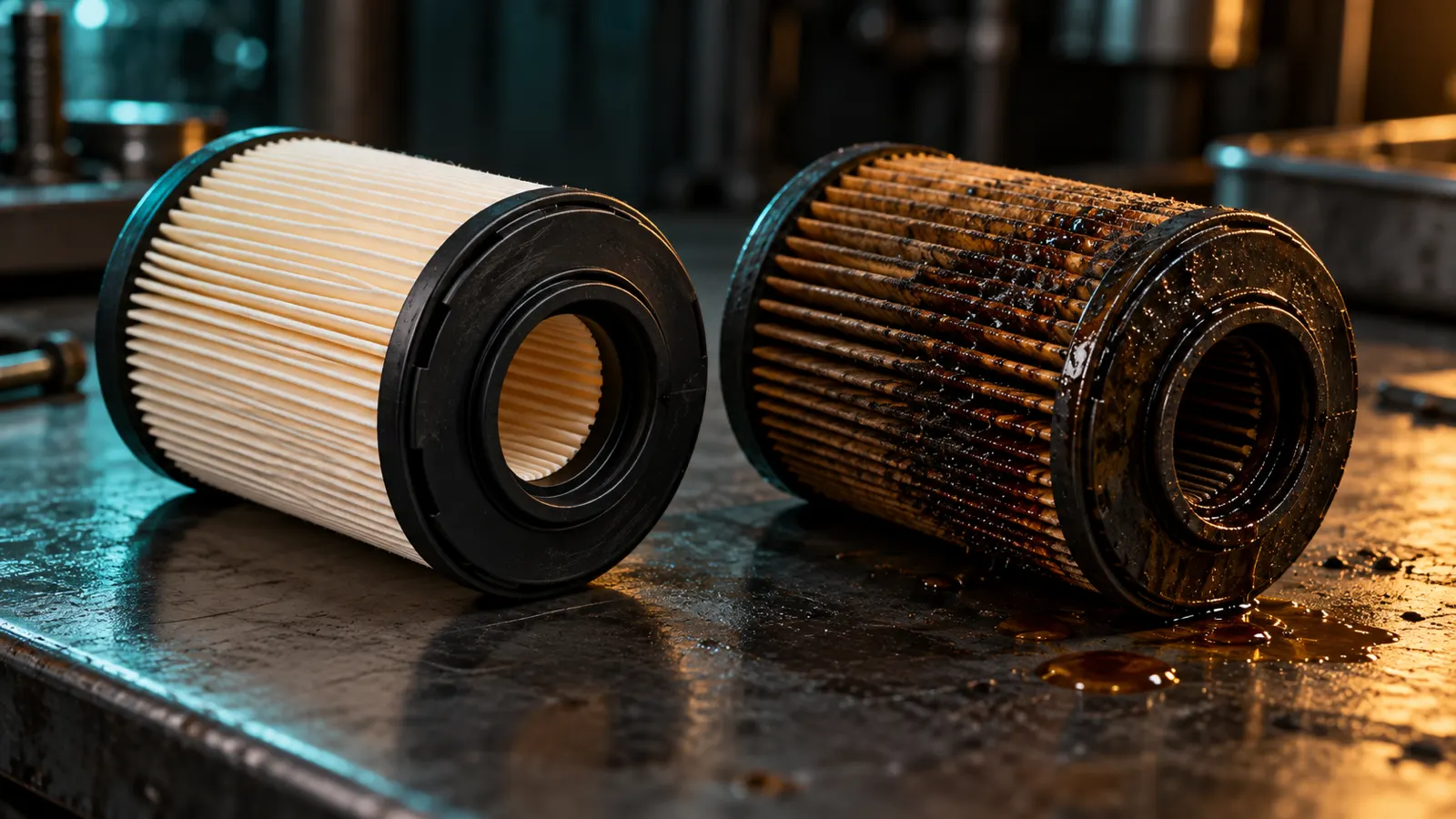
A neglected filter sets off a predictable chain of symptoms, usually in this order:
- Reduced power under load, because the clogged media restricts fuel flow[8][9].
- Hard starts, especially in cold weather or after the truck has sat for a few hours[8][2].
- Black smoke under acceleration, a sign of incorrect fuelling and incomplete combustion[3][10].
- A fuel warning light and limp mode, which the engine computer uses to protect the engine[9][4].
- A total no-start[4].
Codes to look for: mechanics diagnosing a supply restriction often see P0087 (Fuel Rail/System Pressure Too Low), which commonly sets when the fuel filters are plugged[11], or P0088[1].
DIY or mechanic? Cost and procedure
On most diesel trucks, replacing the fuel filter is a manageable DIY job with basic hand tools[1]. The money you save depends heavily on the platform.
| Vehicle | OEM filter | Aftermarket | Labour | DIY difficulty |
|---|---|---|---|---|
| VW TDI | £40–£60 | £20–£35 | £120–£180 | Needs a VCDS scan tool to prime[15][16] |
| Ford Power Stroke | £110–£145 | £55–£80 | £250–£380 | Dual filter. Tight secondary connections[12][17] |
| Ram Cummins | £120–£160 | £60–£95 | £220–£320 | Dual filter. Hard-to-reach rear housing[13] |
| GM Duramax (L5P) | — | — | — | Single chassis filter[14] |
Prices are typical UK estimates for parts and labour. Get a local quote for your vehicle.
Bleed the air out. This is the step most DIYers get wrong.
A diesel won’t start or run properly with air trapped in the fuel system[8][1]. Keep everything clean during the job. Blow out every part before installing it so debris can’t get into the fuel on the clean side of the filter, where nothing will catch it[18].
Priming by truck:
- Ford 6.7L Power Stroke: don’t pre-fill the filters[12]. Turn the key to ON so the electric frame-mounted pump runs (about 30 seconds) to purge air[18]. Cycle the key 6 times, then crank[2].
- Ram 6.7L Cummins: turn the key ON (don’t start) and let the in-tank lift pump run until it stops humming, then repeat the cycle[2][13].
- GM Duramax LB7 to LML (older): open the brass air bleed screw and press the manual primer button repeatedly until a solid stream of fuel comes out of the port[2].
- VW/Audi TDI: prime the fuel pump electronically with a scan tool such as VCDS[15][16].
The verdict:
- Domestic trucks (Ford, Ram, GM): doing it yourself saves the labour, which is often £200–£380.
- VW/Audi: a professional replacement is the safer choice unless you own the scan tool needed to run the fuel pump electronically.
What happens if you skip it
The damage from a neglected filter is severe, and entirely preventable. It progresses in stages:
- Restriction. As the media loads with particles and water, flow restriction rises and suction-side pressure falls[3]. At around 8–10 PSI of differential pressure the pleated media starts to deform, and at 12–15 PSI it can collapse completely[2].
- Cavitation. The high-pressure pump is starved of fuel, which causes cavitation and accelerated internal wear[3].
- Metal in the system. The pump’s internal cam and roller wear metal-on-metal and shed shavings into the fuel rail, injectors and return lines[1].
Repair costs climb quickly:
- One injector: $350–$1,500 to repair or replace[3].
- A full set on a 4-cylinder: about $1,400–$6,000 (four times the single-injector cost)[3].
- Catastrophic CP4 pump failure: $8,000–$12,000+. The cleanup usually means flushing or replacing the whole fuel system[5][1].
Ford’s TSB 11-10-10 ties internally shorted 6.7L injectors to contaminated fuel (such as DEF in the tank) and fuel gelling[11]. One $50–$100 filter, changed on time, protects you from all of it[5].
Biodiesel and shorter intervals
Biodiesel blends above B20 can clog filters faster. They loosen old deposits in the fuel tank and push them straight into the filter[1]. Many owners who run higher blends cut the interval to about 10,000 miles to deal with the faster clogging[1].
Is your diesel fuel filter due? Quick checklist
- Miles: has it been more than 15,000 miles (or 10,000 if you tow or run biodiesel) since the last change?
- Time: has it been more than 12 months? Ford’s schedule uses whichever comes first[1].
- Water: have you drained the separator at your last oil change?
- Symptoms: have you noticed power loss under load, hard starts, black smoke or a P0087 code?
- No record? If you don’t know when the filter was last changed, assume it’s due.
This is exactly what CarInterval is built for. Set your diesel fuel filter interval once, log each replacement as you go, and never wonder when it’s due again. Download CarInterval on the App Store.
Keep reading
- Timing Belt Replacement: Interval, Cost and Warning Signs
- Cabin Air Filter Replacement: How Often, Cost and Signs
- When is my car due for service? Look up your car’s intervals
- All car maintenance posts
Stop guessing when things are due: download the CarInterval maintenance history app.
One filter. One reminder. Set it in CarInterval and forget about it, until CarInterval reminds you.
Frequently asked questions
How often should I replace my diesel fuel filter?
What are the symptoms of a clogged diesel fuel filter?
Can I replace a diesel fuel filter myself?
Yes. On most domestic trucks it is a manageable DIY job with basic hand tools. However, you must carefully follow the manufacturer’s specific air bleeding and priming procedure before driving off to prevent air from reaching the injection pump. VW/Audi TDIs usually need a scan tool such as VCDS to prime the system. [1][8][16]
What happens if I don't change my diesel fuel filter?
Why does my diesel fuel filter need bleeding after replacement?
Does a water separator need separate maintenance from the fuel filter?
Yes. The water separator bowl should be drained at every oil change (roughly every 10,000 miles) to keep water away from the injection pump. Water left in the system feeds microbial growth (diesel bug) and can wreck the pump, which has no lubrication of its own. [1]
Sources
Every fact on this page is checked against the sources below. Quotes are copied from the source; numbers in brackets in the text link here.
-
USA Diesel Finder:
6.7 Powerstroke Fuel Filter Service Guide: Intervals & Costs.
The CP4 high-pressure pump depends on the fuel itself for lubrication — it has no separate oil supply.
-
iFJF Direct:
Top 5 Diesel Fuel Filter Housing Problems and How to Fix Them.
The factory service interval for most diesel fuel filters is 15,000-22,500 miles depending on the platform.
-
Goldfarb & Associates:
How to Diagnose Common Rail Fuel System Problems.
Clogged or restricted fuel filters starve the high-pressure pump of adequate fuel supply, causing cavitation and accelerated internal wear.
-
Stellantis (FCA US):
Technical Service Bulletin 14-010-25 REV. A — Frequent Repairs Of Fuel Line Components Such As Fuel Filters (May 29, 2025).
Last fuel filter replacement was at an interval of more than 24,140 km (15,000 mi).
-
Cerma Treatment:
HD Diesel Maintenance Schedule: Powerstroke vs Duramax vs Cummins.
Factory intervals optimize for the warranty period (5-10 years / 100K miles).
- EuroX Performance: EuroX Performance blog (incl. "Mercedes BlueTEC Diesel Injection Issues").
- Sur Le Voitures (YouTube): Changer le Filtre à Gasoil / Carburant BMW X3 F25, X5, X6 2.0D (2014-2017).
-
Hinsdale Automotive:
Diesel Fuel Filter Replacement.
Reduced engine power, particularly under acceleration or load
- Bullet Automotive: Why Is My Diesel Pickup Truck Losing Power?.
- Newton Ford South: Diesel Engine Maintenance Schedule.
-
Oregon Fuel Injection:
2011–2016 6.7L Ford Powerstroke Diagnostics.
Refer to Ford TSB 11-10-10. An internally shorted fuel injector can be caused by DEF contamination in the fuel or by fuel gelling.
- NoNonsenseKnowHow (YouTube): Ford 6.7L fuel filter change, 2011–2016 F-350 Power Stroke.
- Adventure Endeavor (YouTube): How To Change BOTH Fuel Filters RAM 6.7 Cummins.
- MasterJacks (YouTube): 2017–2024 Duramax: Fuel Filter Replacement (L5P).
- mark_b6s4 (YouTube): Q7 TDI fuel filter priming VCDS.
- Spencer Dollman (YouTube): Using VCDS to prime a TDI fuel system after fuel filter replacement.
- SPELAB Auto Parts: Lower Fuel Filter Upgrade Kit for 2011–2016 Ford 6.7L Powerstroke.
-
S&S Diesel Motorsport:
Gen 2.1 Ford DPK Full Kit Instructions (March 14, 2025) (March 14, 2025).
Cycle the key to the accessory position to allow the electric fuel pump to run for 30 seconds to purge air
Page history
- : First published. Links and figures checked against 18 sources, including a Stellantis technical service bulletin for the Ram 6.7L Cummins.